
The Firmware Hub · FM-1 · h1

h10.3.0 · beta

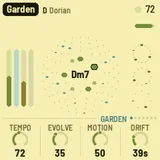
handy-1 (h1): sixteen instruments, each a full-screen animated picture you play. PRESETS changes the instrument, ALGORITHM changes its character, and the four knobs always shape the sound and the picture together. Loop recorder, step sequencer, arpeggiator and metronome built in.
Text by the maker.
About it
- Runs on
- FM-1 · Browser ↗
- Release
- 0.3.0 · released 20 Nov 2026 · on the hub since 18 Nov 2026602 KB · what's new
- Licence
- MIT · source ↗ · copy on the hub
- Flash chip
- Every FM-1, the newer chip
0xB36014too - Identity
FM-1_481000300what it reports over USB while it runs- Build
- Built by GitHub Actions from 4cff936, signed
- Popular
- ↓ 215 installs via the hub · ★ 14 on GitHub
Ratings
Like h1



Changelog
What changed, version by version5 versions
0.3.0
Identity FM-1_481000300. Two drum machines, and the fixes from the GitHub issues so far.
Instruments
- TILT (the fifteenth): electronic drum kits, 8-bit first, on a pinball table that is a drum kit. The kick is the flippers, the snare and toms the bumpers, the crash fires the plunger. Knobs TUNE, DECAY, BOUNCE, BITS.
- PLUNK (the sixteenth): drum kits of recorded hits (gong, bells, darbuka, congas, timpani, anvil) on a steel tongue drum in a garden in the rain. Knobs TUNE, DECAY, WIND, STORM.
- A few of the pictures hide something for whoever plays them a certain way, some with a sound of their own.
USB
- Hold OCT− and OCT+ for a second: the USB port plays host to a USB-MIDI keyboard (#23), which needs its own power or a powered hub. The screen and the screen reader name it when it connects. Hold again to go back to the computer. Never saved: every start is a USB device.
Room
- fm1-base's system fonts (the update, crash and safe-mode screens) are stored trimmed and compressed: the same pixels in far less flash, which makes room for new instruments. Text on those screens draws a little slower.
Loop
- Takes layered on the loop no longer go missing. The loop held 384 events (a press and a release a note), across every layer, and quietly dropped whatever came after: three light layers on eight bars filled it and the fourth was lost. It now holds 2,048 (1,024 notes), a note never goes in without room for its release, and when the loop is full the screen says LOOP FULL instead of dropping notes in silence.
- BARS goes up to 128 (1, 2, 4, 8, 16, 32, 64, 128). The bound on a loop is now its notes, not its bars: 1,024 notes across all layers, so 128 bars holds eight notes a bar.
- A loop that is still playing is kept through a power-off (#39). It used to be saved only once it had been stopped with PLAY, because a save erases flash and that stalls the sound; a loop left playing was lost. It now goes into flash erased ahead of time (at start, or while nothing sounds), a little at a time while it plays, so nothing is heard. A power-off in the middle of a save leaves the loop before it. Saves go one after another into the space set aside, so a loop left playing has room for dozens of takes before it next stops; a big loop (over about 600 notes) has room for three. Once it stops, the space is cleared again. The instrument in hand and its knobs are saved once nothing sounds, as before.
Sound
- LAVA has a ninth algorithm, HOOVER (#24): two PWM saws (a saw plus a copy of it swept along, the old Juno trick) a little apart, a swoop up into every note, and a light fold. FOLD sets how far the sweep goes and LEAN how far apart the two saws are. Its lamp turns into a whirl that twists harder the further it sweeps. Every other instrument keeps eight.
- The saved state is version 9 and a saved loop version 2, so a recorded note can name a ninth algorithm. Version 9 has room for sixteen instruments and says how many it was saved with, so instruments added later come up as new without another change of format. States and loops saved by 0.2.2 load as they were; an older firmware refuses a version 9 state and starts fresh.
- EDIT + MASTER no longer turns everything else up (#38). While MASTER was the instrument's volume, everything's volume was held at a level worked out on a different curve from the knob's, so the other instruments and the loop's layers jumped louder (at half way, by about 12 dB) until the knob came back through it. The held volume is now the knob's own, and it is held from the moment EDIT goes down, so a nudge too small to count does not move it either.
- BARD's drone no longer cuts out when the playing stops. It went within about a tenth of a second of the last note dying away; it now holds for a little over a second (a rest between phrases keeps it going) and then dies away over a few seconds, the way a wheel runs down or a bag empties.
- ECHO no longer turns grainy the longer the unit is on (#31). Its read position was worked out in a float from a counter that never stops, so after about 13 minutes it lost the fraction of a sample, then whole samples, and only a restart brought it back. It now sounds the same after hours as at start.
Name
- h1 is also called handy-1. Listings read handy-1 (h1):
firmware.jsontakes its name from a newtitleinapp/fm1.toml. The id, the package's file names and the USB name stayh1.
0.2.2
Identity FM-1_481000202. From the first round of feedback after the launch.
Sound
- No more crackle or fuzz on loud chords. Six keys at once on most instruments came to two to five times full scale, and the soft clip at the end bent every peak. A limiter with 0.7 ms of look-ahead now holds the mix under that point and lets go over about 100 ms; a note or two at an ordinary level goes through untouched. Loud chords are a little quieter than before, and clean.
- A voice taken over while it still sounds (fast runs on eight voices) no longer jumps: the new note starts where the old one was.
- COZY's DUST pops are half as loud. They were the loudest thing in the mix.
Velocity
- Notes from a MIDI keyboard (USB or TRS) play at their velocity: about 20 dB from the softest to the hardest, and darker the softer they are. The FM-1's own keys play at full, as before.
- The loop and the step sequencer record the velocity and play it back.
Layers
- LAYERS is on by default, and comes on with the update. Record a loop, change instrument, press REC and play over it: that is a new layer. SEQ + REC still turns it off.
- Each layer keeps its own settings: the instrument, the algorithm, the four knobs, ENV and LFO, as they were when its take ended. Record a bass on COZY, turn the same COZY into a pad and record over it: the bass stays a bass. (The effects are still one chain, following the instrument in hand.)
- The screen says so: changing instrument over a loop shows
REC: NEW LAYER, a take showsLAYER 2,LAYER 3, and a dot for each layer sits by the loop's progress line.
The loop survives a power-off
- The loop and its layers are saved to flash once the loop is stopped and nothing sounds (stop it with PLAY), and come back after a restart. They go in a sector pair of their own (0xDE000) through the platform's storage, which knows both flash chips (P25Q80 and UC25HQ80); the boot loader and the panel's calibration are not touched.
USB audio and MIDI out
- The FM-1 is a USB audio input beside its USB MIDI: a computer or a phone records it straight off the cable, at MASTER.
- MIDI out over USB: the keys, the arpeggiator and the sequencer's notes on channel 1, and CC 20-23 as the four knobs turn. Notes and an all-notes-off (CC 123) that came in over MIDI are not sent back. (The FM-1's TRS jack is an input only, so there is no MIDI out there.)
Under the hood
- Saved state version 8. A 0.2.0 or 0.2.1 state (version 6) loads as it was, with LAYERS turned on. A 0.2.1 or older firmware does not read a version 8 state: going back loses the settings.
0.2.1
EDIT held and MASTER: the instrument's volume, and MASTER waits for the knob to come back. The CC0 recordings named in fmhub.json.
0.2.0
The graphics pass, BARD and TWANG on CC0 recordings, and each instrument's own volume (EDIT held and SELECT).
0.1.0
The first release: fourteen instruments, the loop recorder and step sequencer, LAYERS, the arpeggiator and the metronome.