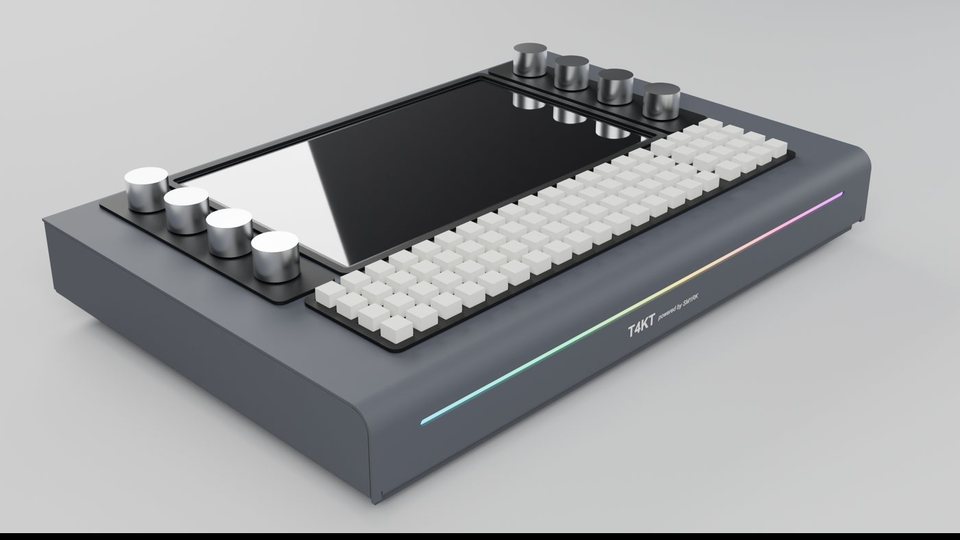

OberVave 3
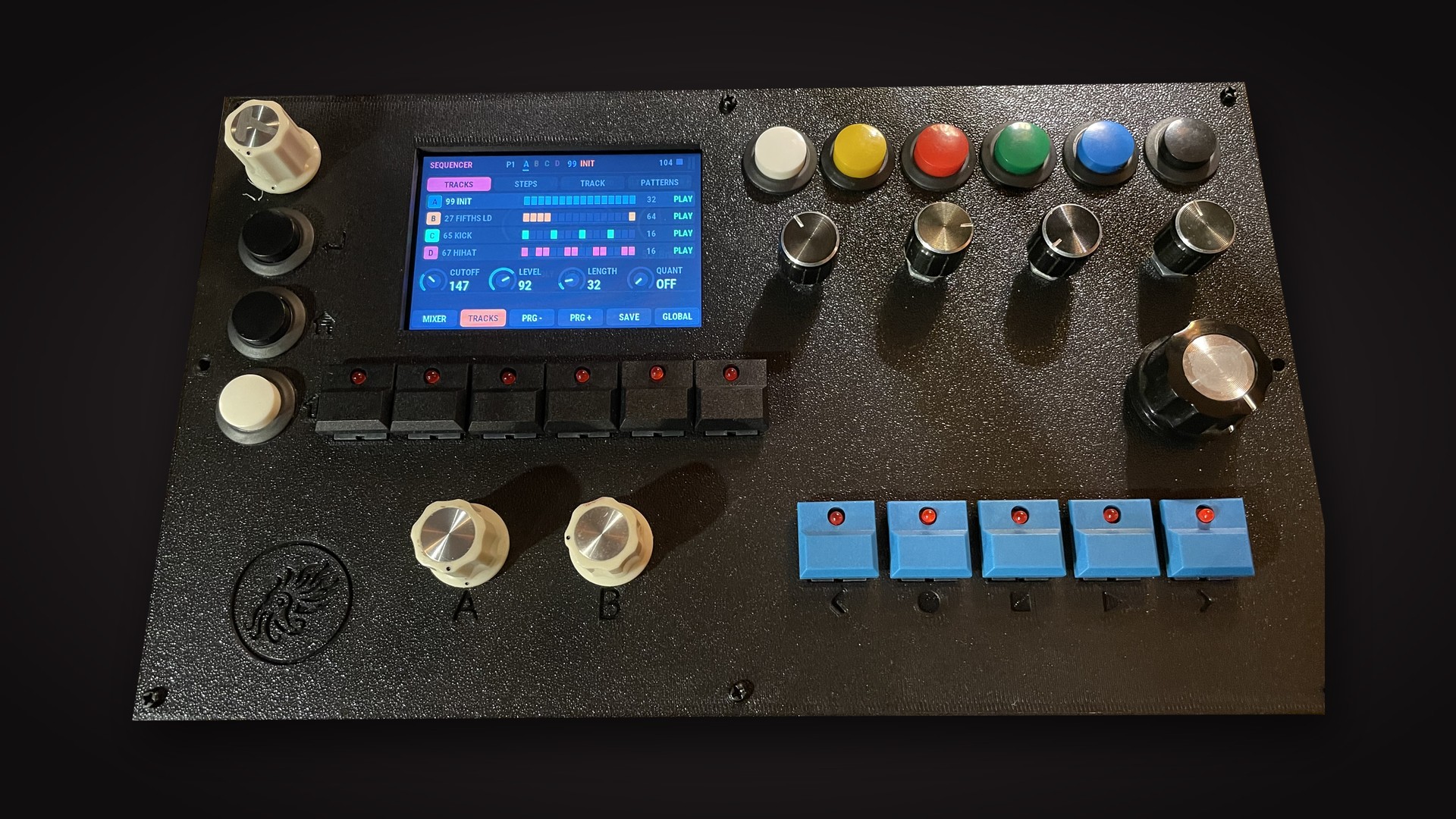
Four tracks of analog-style poly – two oscillators a voice, a 12 / 24 dB filter, an arpeggiator, a step sequencer per track, a mixer with drive – and any track can be an audio track. In your DAW: every sound parameter automatable, an Editor of its own.
New in 3.9
LOAD and SAVE pages (F3 / F4): PRESET – one sound as a file; PATTERN – the pattern with its sounds, mixer and audio tracks, the takes as WAVs beside it, loaded into any pattern; AUDIO – a take as a WAV, and a take another pattern plays, or any WAV, into any pattern and track; SONG (ALL) – everything, and NEW SONG empties all 64 patterns (settings and programs stay). F5 is STORE, the program slot.
3.8.1 – GAIN for IN 1 / IN 2 on the AUDIO page (+0 … 40 dB) and an input level bar top right, red when it clips – turn the interface down below clipping and make the level up here. A take keeps one latency from its start.
3.8 – An audio track belongs to its pattern: each pattern its own audio tracks and takes – they change with it on the bar, and all takes share ~23 min of stereo. A filter per audio track (LP / HP / BP, cutoff, resonance, drive). CUT in sixteenths, bars or milliseconds. UNDO with 16 steps: hold RETURN, turn encoder 1.
3.7 – Audio tracks: any of the four tracks plays audio instead of the synth (SOUND, last page: TYPE). Record from IN 1 / IN 2 – mono, or both as stereo – or resample what you hear; as a loop or as a tape from bar 1 for a whole song; overdub; cut (erase, delete, crop). Up to ~5:49 of stereo or ~11:39 of mono a track; the takes are WAVs on the card. 64 patterns (was 8). Songs: FILES (F6 three times) saves all 64 patterns, the sounds, the mixers, the settings and the audio as one named song and loads it back – and loads any WAV from the card or a USB stick into a track (other rates converted). It needs 320 MB of memory: a phone's browser may say no.
Since 3.3: LP 24 is a real four-pole ladder now, the resonance fed back around all four stages with a tanh in the loop, so it compresses instead of thinning and the bass stays. No hard clipping anywhere in a voice, DRIVE from warm to fuzz, VINTAGE wanders on the cutoff too. Since 3.2: every pattern keeps its own tempo, VOICE sits with the sound under SOUND after OSC 2; since 3.1: the sequencer follows the song position and your loops, the tracks play out over MIDI with clock.